

Before buying a used car in the UAE, check the paperwork (registration, VIN, service history), the body (panel gaps, paint differences, rust), the engine bay (leaks, fluid condition), the tyres and brakes, every electrical feature, and how the car drives on a test drive. Some problems, such as repainted panels, cleared fault codes and underbody damage, need tools to find, which is what a professional pre-purchase inspection adds.
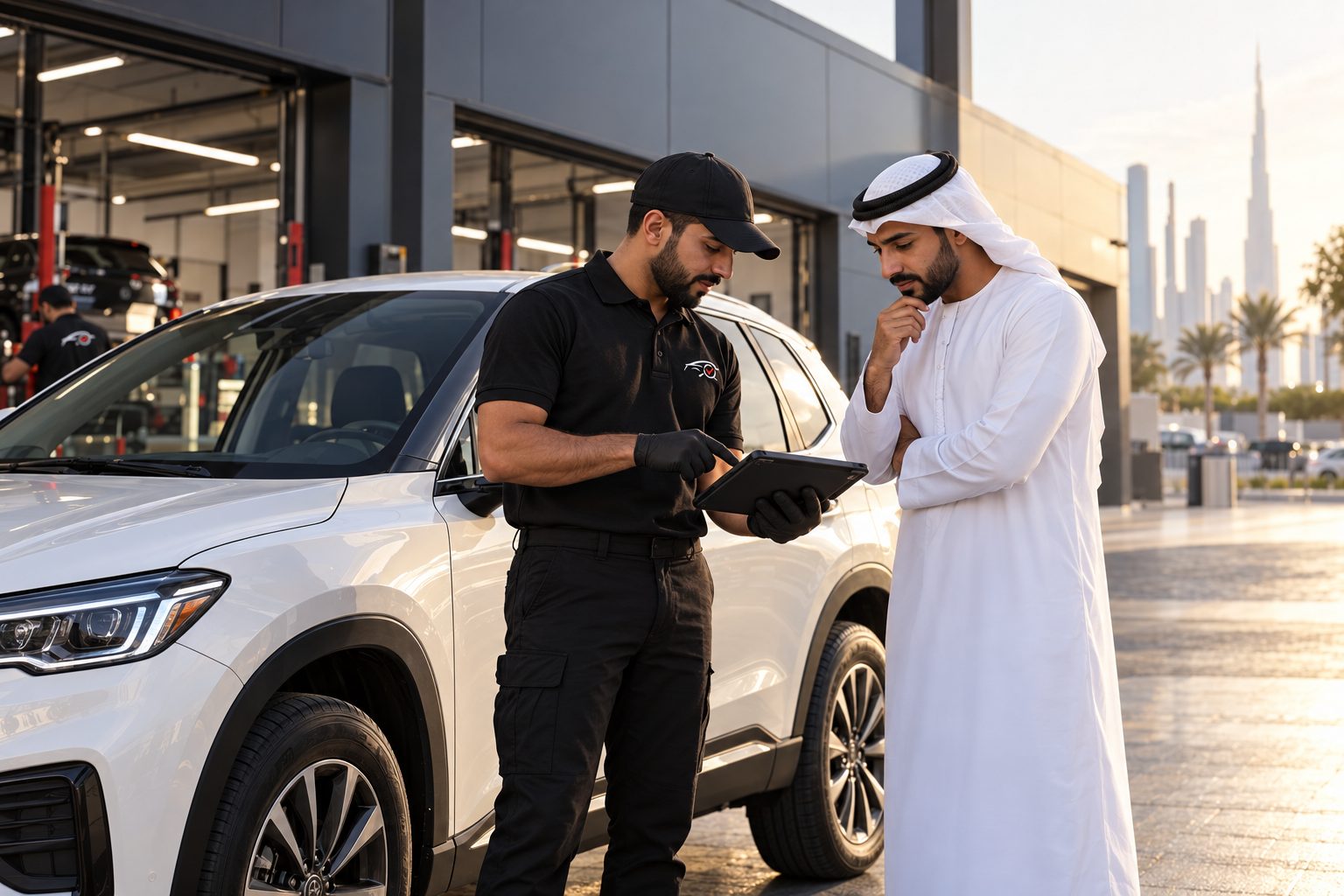
Use this checklist during your viewing. Take your time, look at the car in daylight, and don’t let the seller rush you. If you find something you’re unsure about, that’s a reason to get a professional pre-purchase inspection before you pay.
1. Paperwork and identity
- Registration card (Mulkiya). Check the owner’s name matches the person selling, and note the registration expiry.
- VIN / chassis number. Compare the VIN on the registration card with the plate on the car, usually at the base of the windscreen and on the driver’s door pillar. They must match exactly.
- Service history. Ask for invoices or a stamped service book. Check that service dates and mileage readings go up consistently.
- Finance. Ask whether the car is still under bank finance. If it is, understand how the loan will be cleared before ownership is transferred.
- Specification. Ask whether the car is GCC-spec or imported. Imported cars aren’t necessarily bad, but their history can be harder to trace, and a vehicle history report helps.
2. Exterior and bodywork
- Walk around the car and look along each side at an angle. Ripples or a “wavy” reflection can indicate body repair.
- Check that panel gaps around the doors, bonnet and boot are even on both sides.
- Look for colour or texture differences between neighbouring panels, and paint overspray on rubber seals or trim.
- Check the date stamps on the glass. One window with a different date may mean it was replaced.
- Look for rust around wheel arches, door bottoms and under the boot carpet.
Matching paint by eye is hard. See how to check whether a car has been repainted.
3. Tyres, wheels and brakes
- Check tread depth across the full width of every tyre. Uneven wear on the inner or outer edge can indicate alignment or suspension problems.
- Find the date code on each tyre’s sidewall. It’s a four-digit number showing the week and year of manufacture. Old tyres can be unsafe even with tread remaining, and UAE heat ages rubber faster.
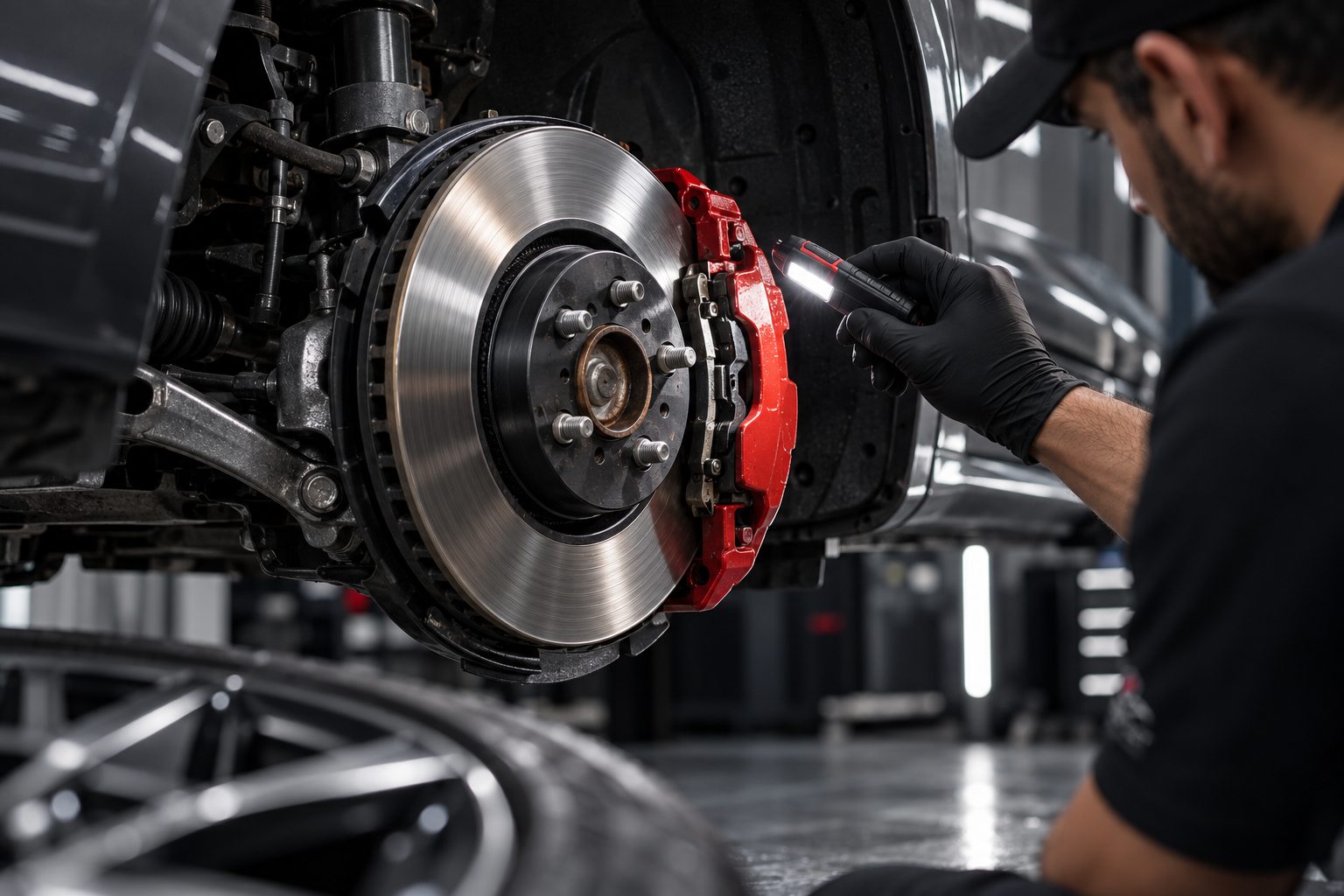
- Look through the wheels at the brake discs. A deep lip on the outer edge of the disc suggests significant wear.
- Scuffed or bent wheels can hint at kerb strikes that may also have affected alignment.
4. Under the bonnet
Ideally, look at the engine before it has been started that day.
- Look for oil, coolant or other fluid leaks on the engine, hoses and the ground underneath.
- Check the oil level and colour on the dipstick. A milky residue under the oil filler cap can be a warning sign.
- Check the coolant level and colour in the expansion tank.
- Look at the battery terminals for corrosion, and ask how old the battery is. Heat shortens battery life in the UAE.
- Listen to the engine start from cold: knocking, rattling or a long crank are worth noting.
5. Interior and electronics
- Test every electrical feature: windows, mirrors, seats, sunroof, infotainment, cameras, parking sensors and lights.
- Run the air conditioning at full power for several minutes. It should blow cold consistently. A weak system is expensive to fix and essential in the UAE.
- With the ignition on, all warning lights should illuminate briefly and then go out once the engine is running. A warning light that never comes on at all can be a red flag.
- Check that the seat, steering wheel and pedal wear is consistent with the mileage shown.
6. The test drive
- Drive at a mix of speeds, including a stretch of highway if possible.
- The car should pull straight and stop straight. Pulling to one side can mean alignment, tyre or brake problems.
- Gear changes should be smooth, without slipping, harsh shifts or delays.
- Listen for knocks over bumps, humming that changes with speed, or grinding when braking.
- Watch the temperature gauge, especially in traffic.
7. What you can’t check yourself
A careful viewing catches a lot, but some of the most expensive problems need tools, a trained eye or access underneath the car:
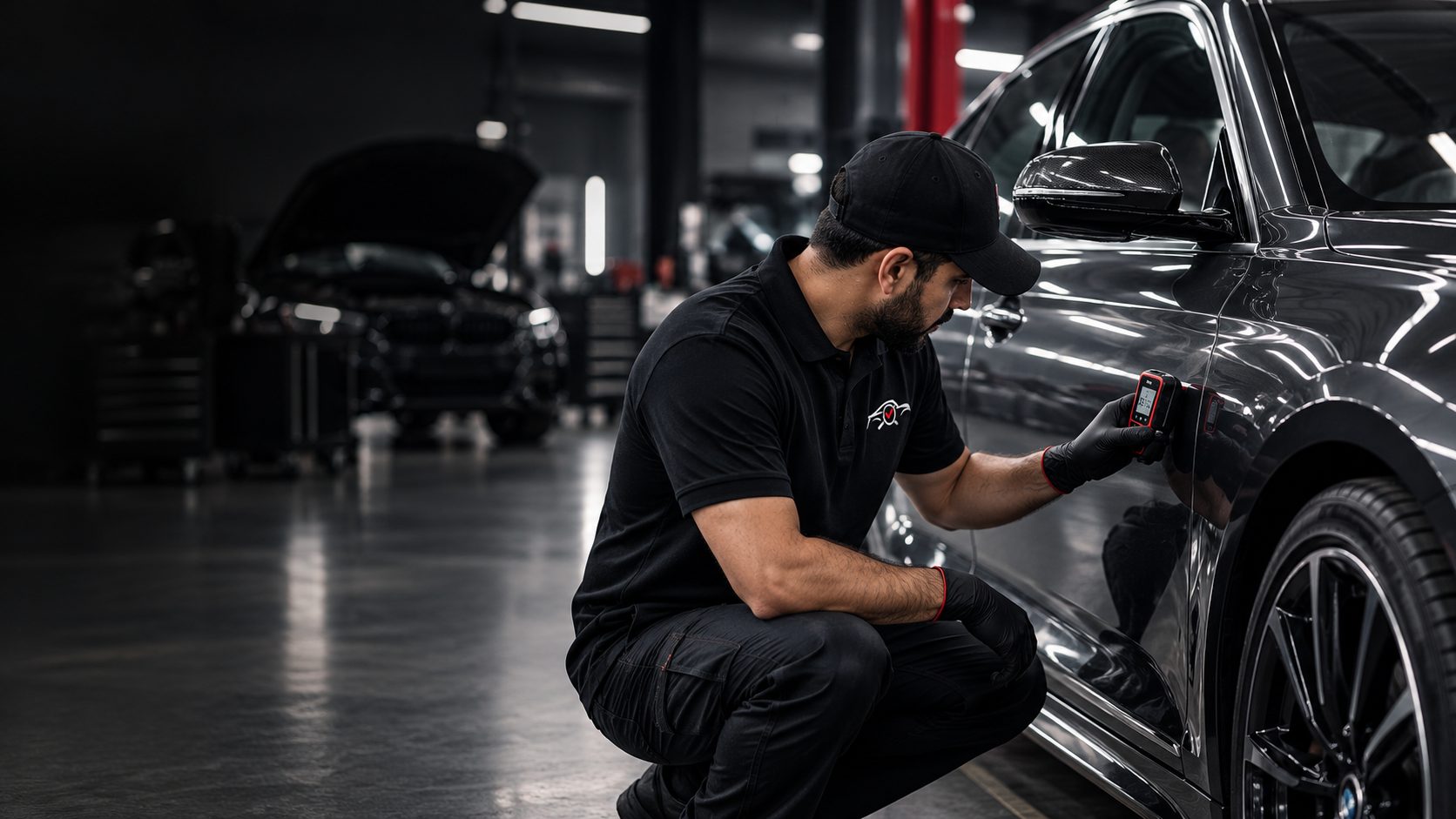
- Repainted panels, measured with a paint thickness gauge
- Stored, pending or recently cleared fault codes, read with a diagnostic scanner
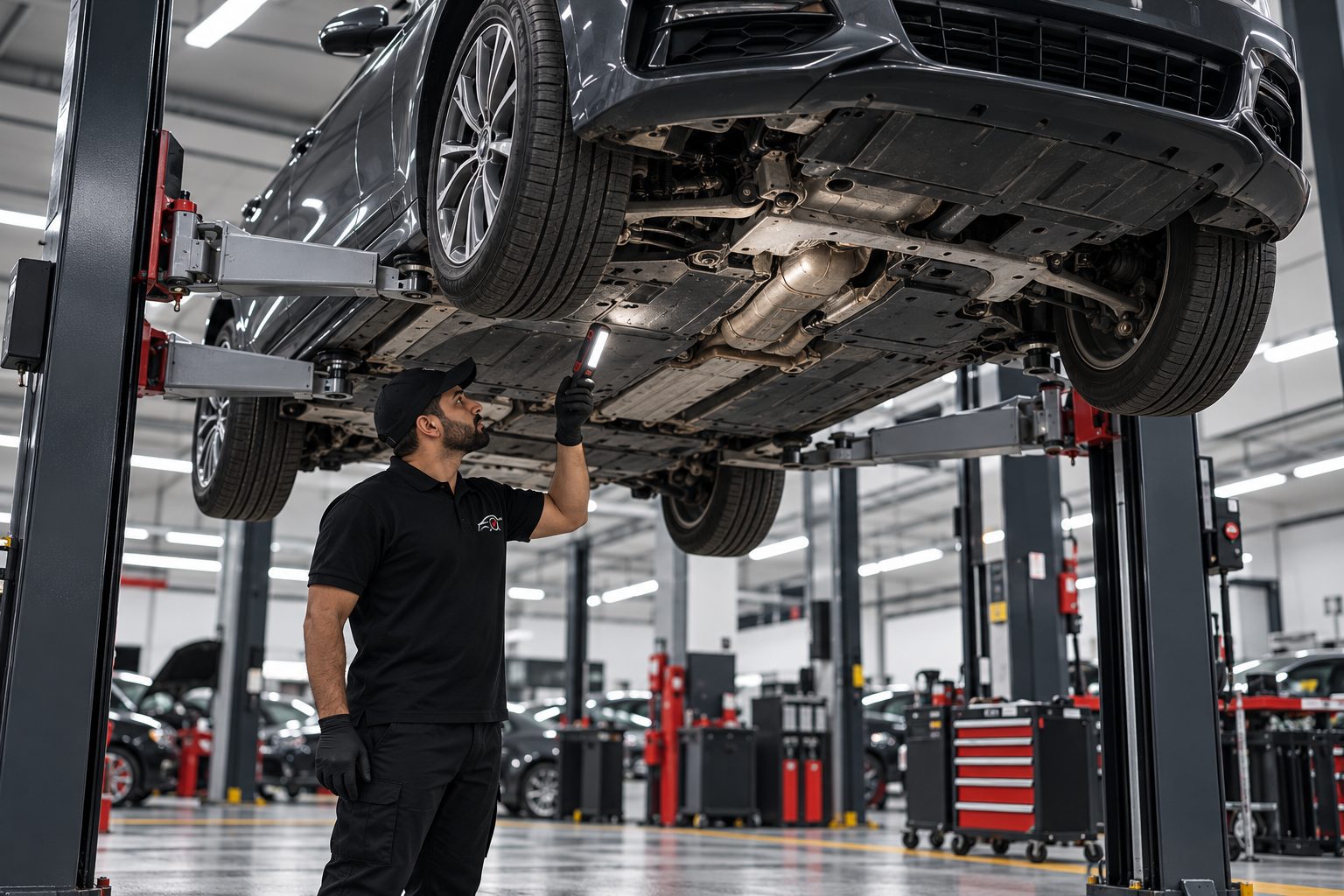
- Underbody damage, rust and leaks that are hard to see from above
- Structural repairs after an accident
- Wear in suspension and steering components
That’s what a pre-purchase inspection covers: 400+ checkpoints with Pro, 600+ with Premium.