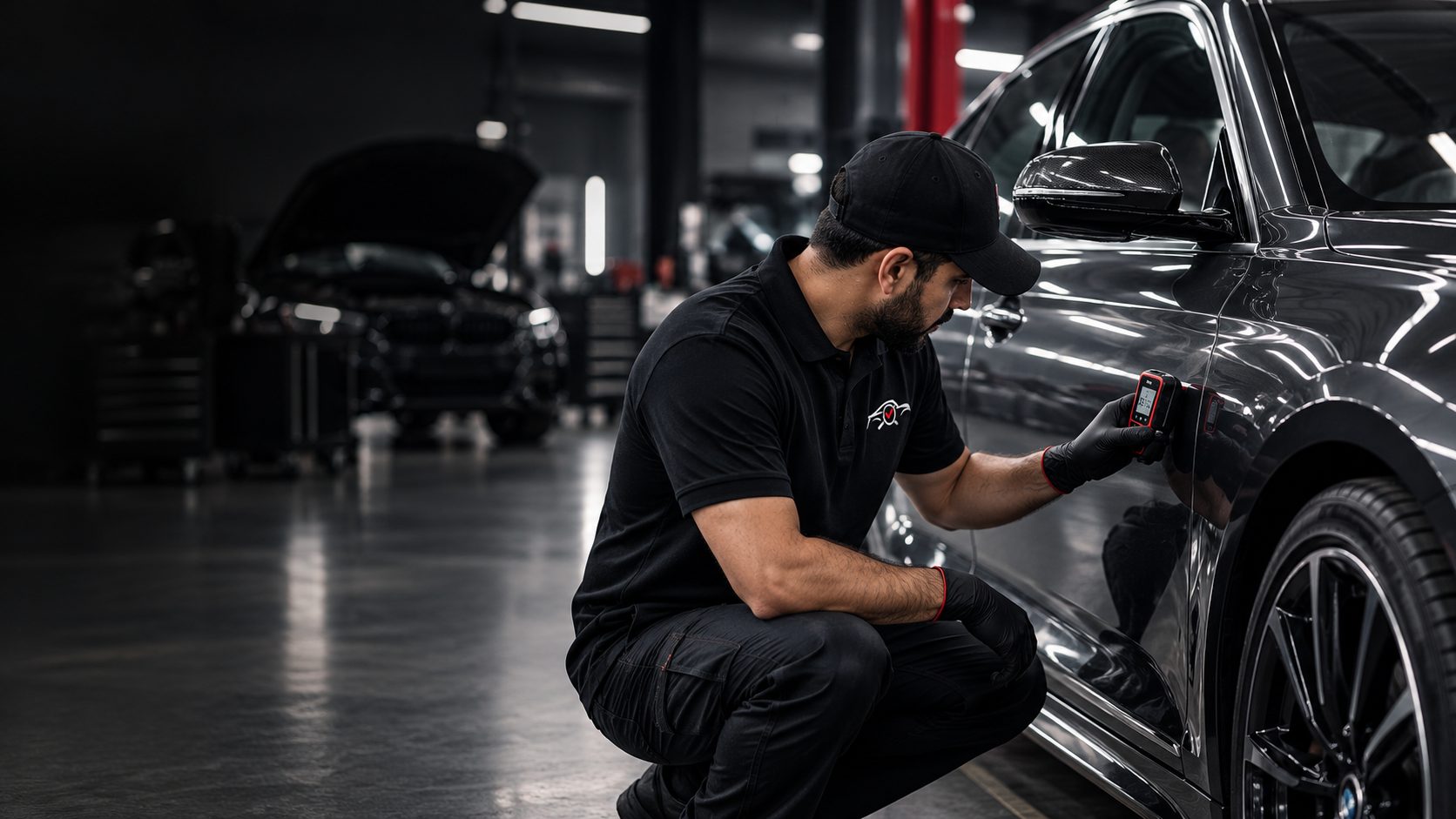


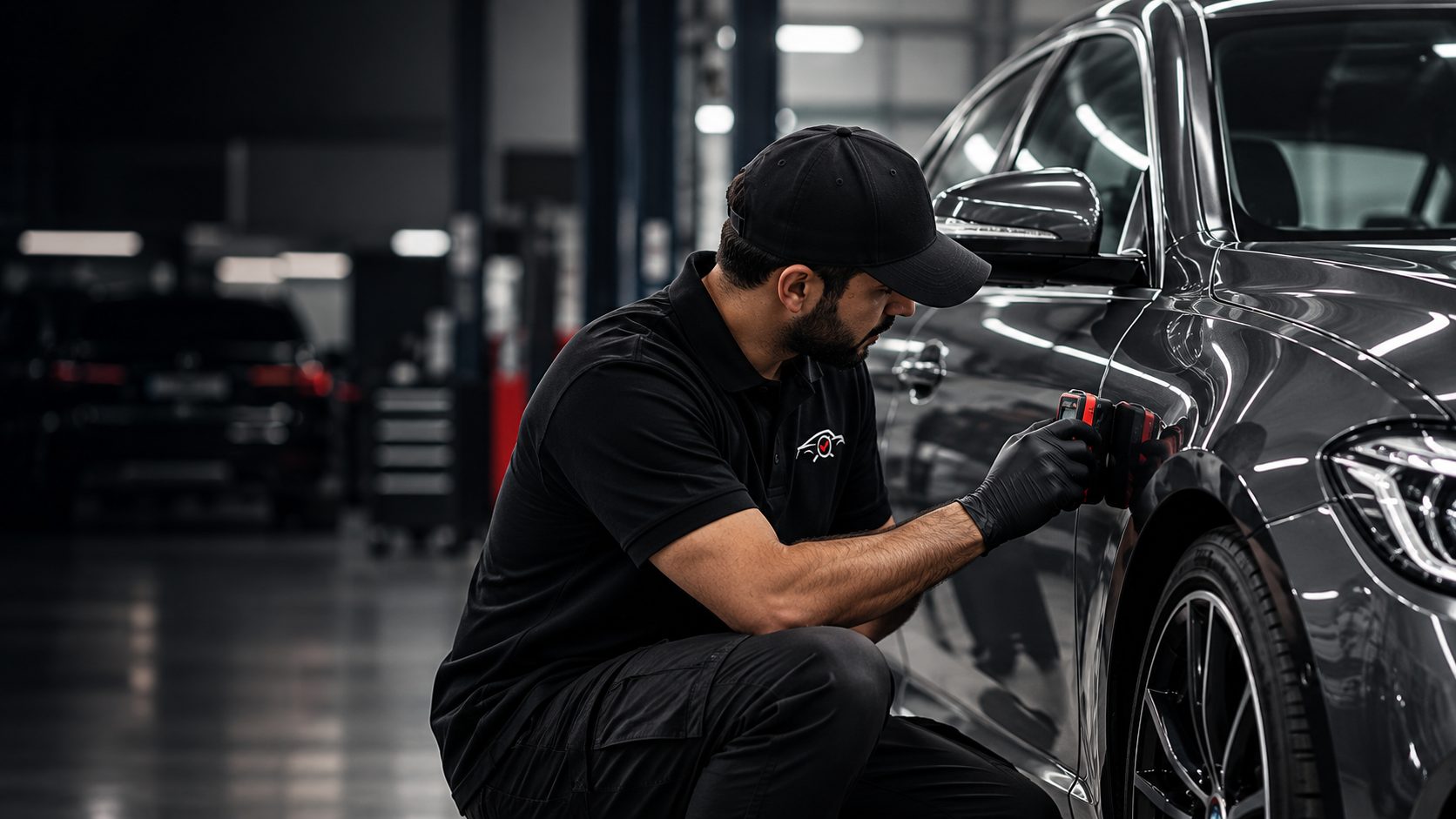
Look for colour or texture differences between panels, overspray on rubber seals and trim, uneven panel gaps and masking lines. The reliable method is a paint thickness gauge: a refinished panel usually reads noticeably thicker than the factory-painted panels around it. A repaint isn't automatically a problem. What matters is why the panel was painted and how well the repair was done.
Repainting is one of the most common things buyers miss. A panel can be repainted for a small scratch, or to hide accident damage. Here’s how to spot it and how to think about what you find.
Signs you can check yourself
Look at the car in daylight, ideally on a clean car.
- Colour match. Stand back and look at neighbouring panels from different angles. Metallic and pearl paints are especially hard to match.
- Reflections. Look along each side of the car. Ripples, waves or a blurry reflection can indicate filler or poor preparation.
- Texture. An “orange peel” texture that differs from neighbouring panels suggests a refinish.
- Overspray. Check rubber seals, window trims, badges, door hinges and under the bonnet for paint where it shouldn’t be.
- Masking lines. Look for a hard edge of paint near trims and seals.
- Panel gaps. Uneven gaps around doors, the bonnet and boot can mean panels have been removed or replaced.
- Bolts. Scratched or painted-over bolts on wings, the bonnet or doors suggest those parts have been removed.
Why a paint thickness gauge is more reliable
A paint thickness gauge measures the total thickness of paint on a panel, usually in microns. Factory paint tends to be fairly consistent across a car. When a panel is repaired and repainted, the extra layers, and sometimes filler underneath, usually make it read noticeably thicker.
An inspector measures every panel and compares the readings. The comparison matters more than any single number, because factory thickness varies between manufacturers and models. Some readings can also suggest a panel has been replaced rather than repaired.
Our inspectors take paint thickness readings as part of every pre-purchase inspection.
What a repaint means for your decision
A repainted panel is information, not an automatic reason to walk away.
- Minor cosmetic repaint, such as a bumper corner or a scratched door: common and often of little concern if the work is good.
- Several panels on one side, or panels around the front or rear structure: may point to a significant accident. Look for signs of structural repair.
- Repaint not mentioned by the seller: ask about it. The answer, and whether there are repair invoices, helps you judge the rest of the car.
Combining paint readings with a structural damage assessment and a vehicle history report gives you the clearest picture. You can also use confirmed repaint findings to negotiate on price.