

Inspect a used car in stages: screen the listing and ask questions before you visit, check paperwork and the VIN, do a walk-around and under-bonnet check in daylight, take a proper test drive, and then book an independent pre-purchase inspection before you agree a final price or pay a deposit.
This guide covers the process from start to finish. For a printable list of things to look at during a viewing, use our used car inspection checklist.
Step 1: Screen the listing before you travel
Ask the seller by phone or message:
- How long have you owned the car, and why are you selling?
- Is it GCC-spec or imported?
- Has it been in any accidents or had any panels repainted?
- Is there a service history? When was the last service?
- Is the car under finance?
- Would you agree to an independent inspection?
Clear, consistent answers are a good sign. Reluctance to allow an inspection is worth noting.
Step 2: Check the paperwork first
At the viewing, before you look at the car itself:
- Match the VIN on the registration card to the car
- Check the registration details match the seller
- Go through the service records and compare mileage readings over time
Step 3: Look at the car in daylight
Viewing a car at night or in a dark car park hides paint differences and damage. Walk around it slowly, then look under the bonnet and underneath as far as you can see. Our checklist covers what to look for.
Step 4: Start it cold, then test drive
Ask the seller not to warm the car up before you arrive. A cold start can reveal noises, smoke or rough running that disappear later.
On the test drive, include low-speed manoeuvring, stop-start traffic, a highway stretch if possible, and firm braking somewhere safe. Run the air conditioning throughout.
Step 5: Book an independent inspection
If the car passes your checks, book a pre-purchase inspection before agreeing a final price. A professional inspection adds what you can’t easily do yourself:
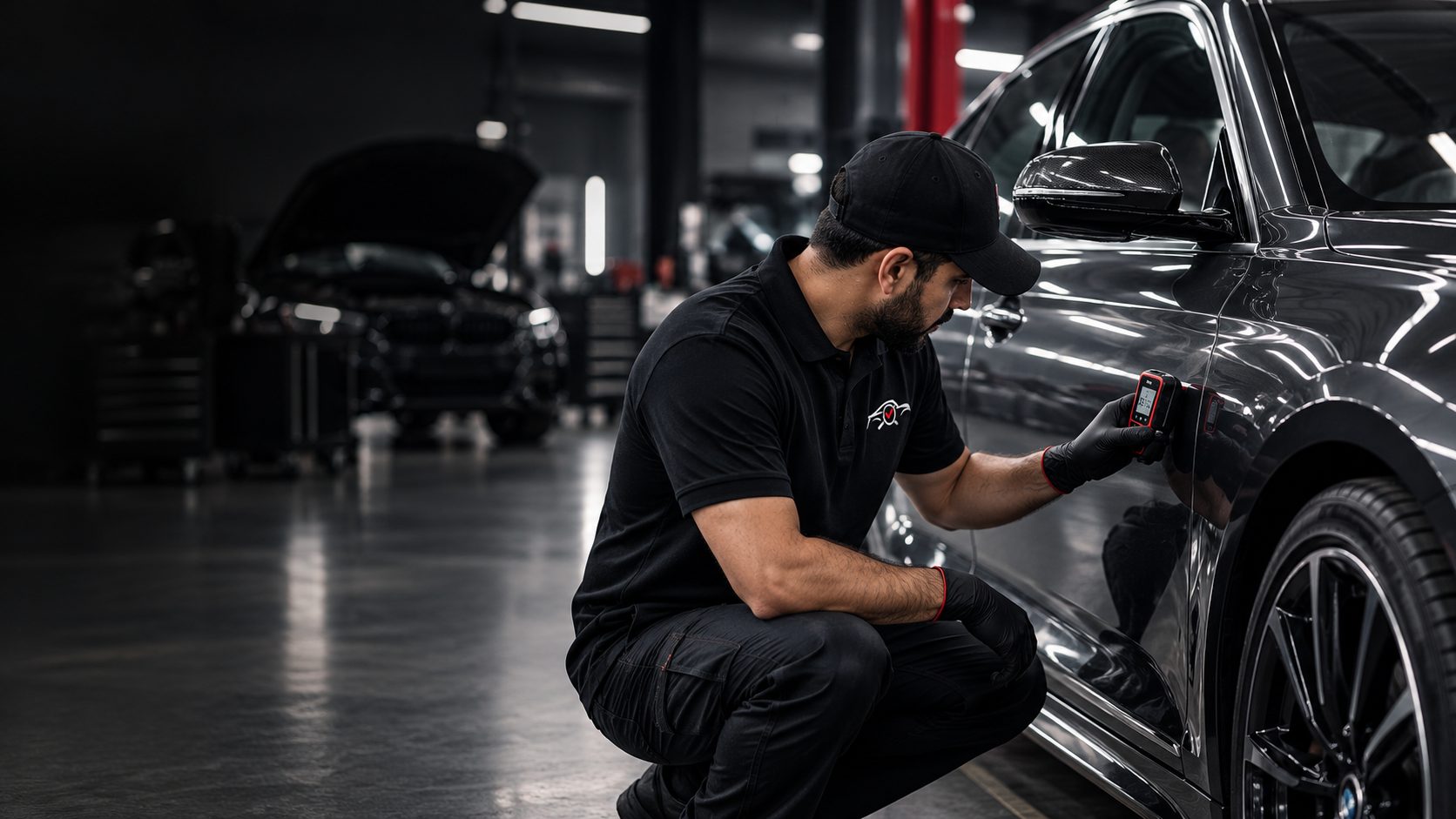
- Paint thickness readings on every panel
- An OBD diagnostic scan for stored, pending and cleared codes
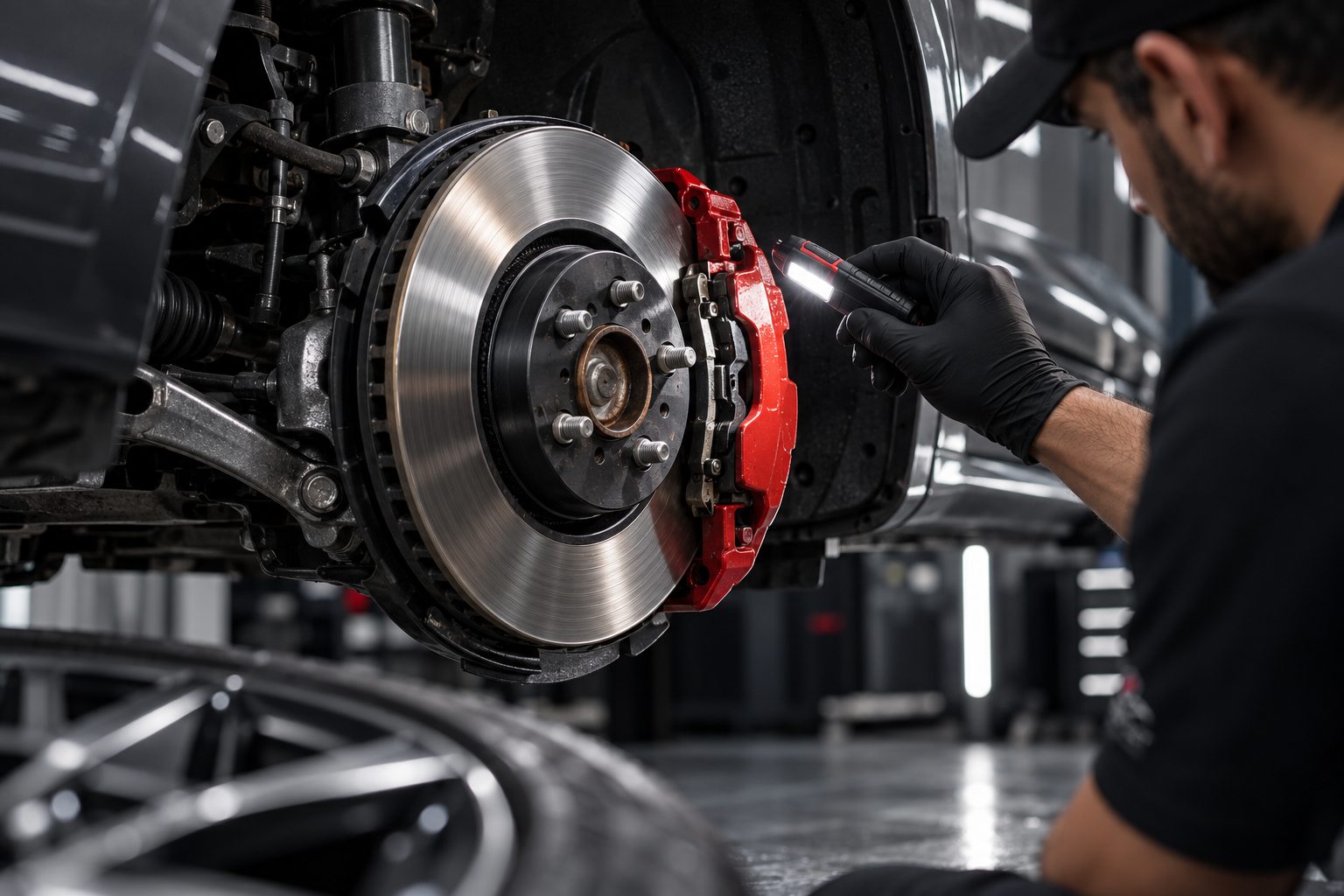
- A thorough underbody, chassis and structural check
- A structured road test by an experienced inspector
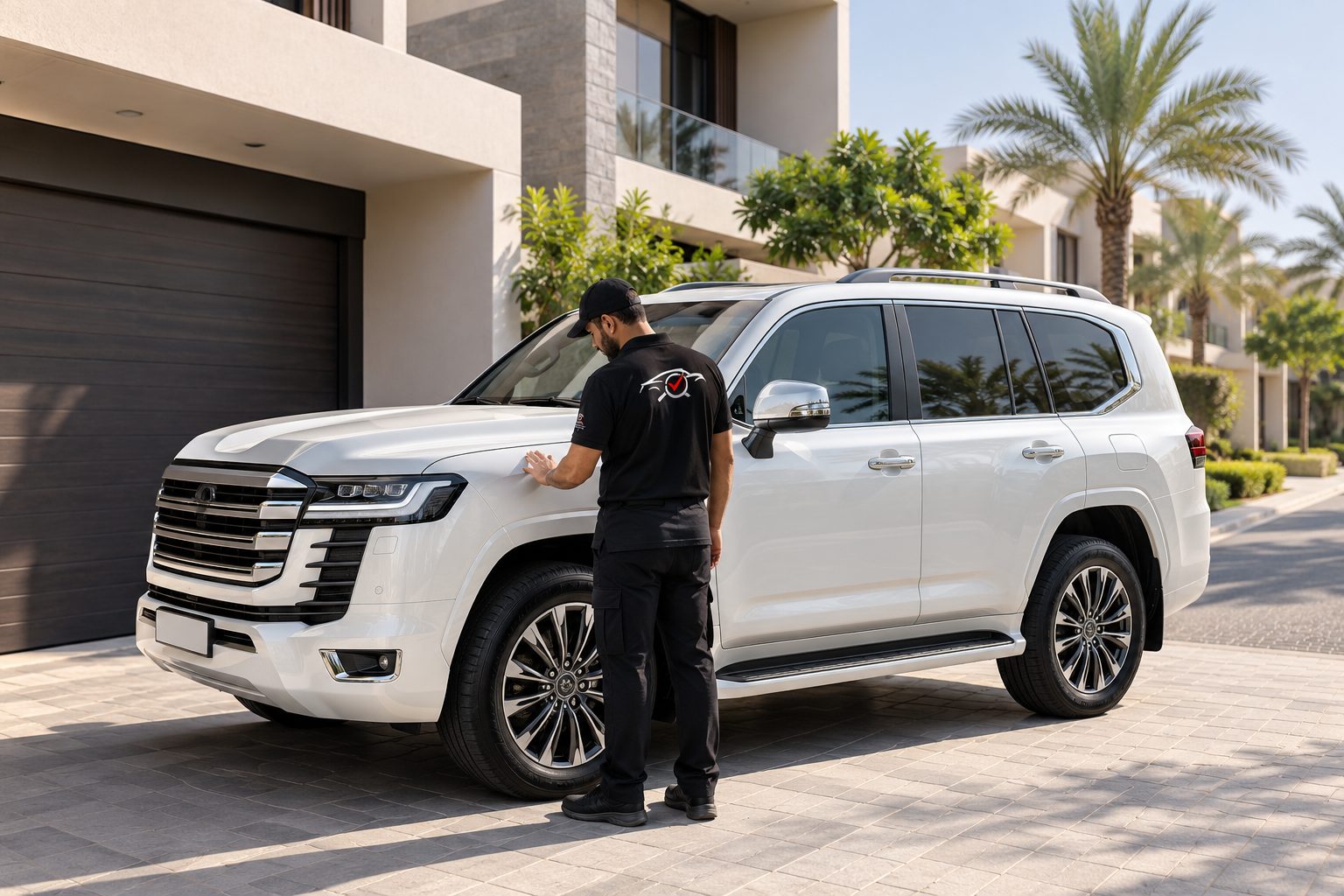
With a mobile inspection, the inspector comes to the car, so you don’t need to arrange to move it.
Step 6: Decide, negotiate or walk away
Use the report to decide. Read how to interpret it. If repairs are needed, ask for them to be done or factored into the price. If the findings are serious, walk away. Another car will come along.
Step 7: Complete the transfer properly
Follow the official process for ownership transfer in your emirate, including any required vehicle testing, and make sure any outstanding finance is cleared.